
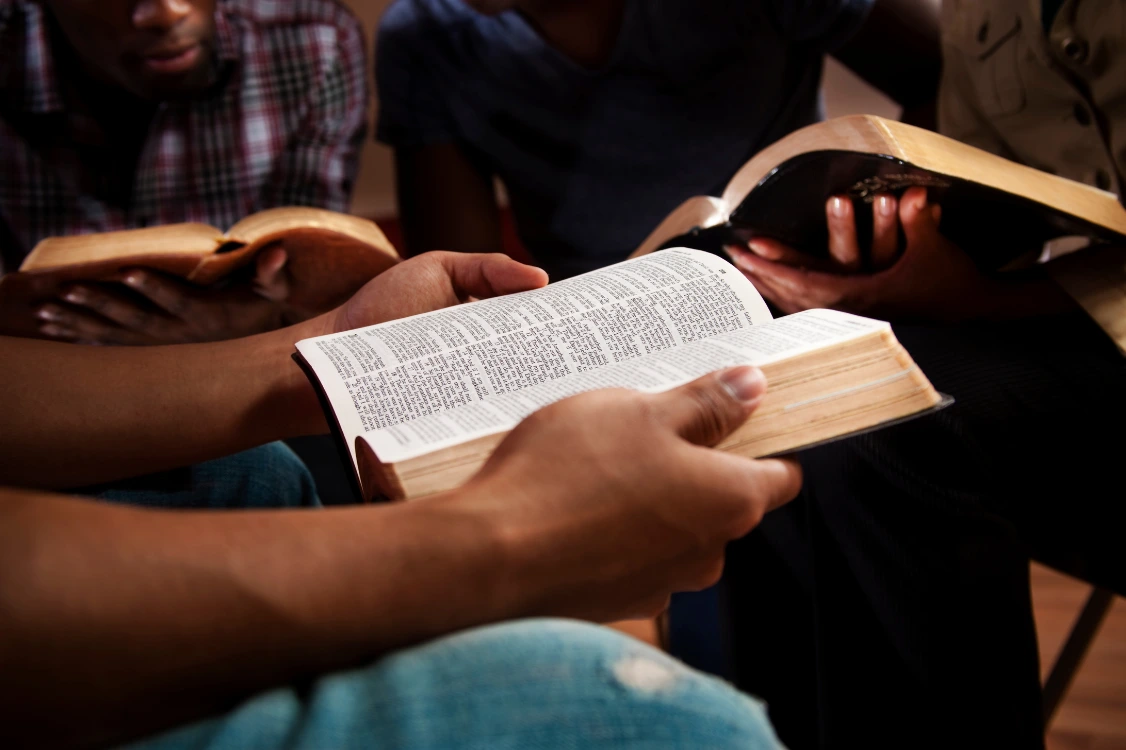
The word addiction does not appear in the Bible but the condition itself is implicitly addressed repeatedly: being mastered by something you know you should not, finding yourself doing the thing you have resolved to stop, and the associated shame and guilt. Paul spoke of this in his epistle to the Romans, chapter 7, in language that few Christians today would find unfamiliar. The following verses have been organized according to common themes likely to be encountered by someone seeking scripture’s guidance on the subject.
When You Feel Helpless
The first step in most recovery programs requires admitting powerlessness, a vulnerability that many find difficult to accept.
Matthew 11:28 — “Come to me, all you who are weary and burdened, and I will give you rest.”
Facing Temptation and Cravings
Cravings are a normal part of the recovery process and scripture does not judge those who experience them. The Bible recognizes temptation as a weakness inherent to flesh and provides counsel on how to deal with it:
1 Corinthians 10:13 — “God is faithful; he will not let you be tempted beyond what you can bear… But when you are tempted, he will also provide a way out…”
1 Corinthians 6:12 — “‘I have the right to do anything,’ you say… but not everything is beneficial… I will not be mastered by anything.”
Proverbs 25:28 — “Like a city whose walls are broken through is a person who lacks self-control.”
1 Corinthians 15:33 — “Do not be misled: Bad company corrupts good character.”
Galatians 5:22-23 — “But the fruit of the Spirit is love, joy, peace… and self-control.”
Note that self-control is presented as a fruit to be matured in, not a virtue to be obtained.
Guilt, Shame, and Forgiveness
Shame often plays a major role in the cycle of addiction, as the guilt associated with the addiction and its consequences can become overwhelming:
1 John 1:9 — “If we confess our sins, he is faithful and just and will forgive us our sins.”
Romans 8:1 — “There is now no condemnation for those who are in Christ Jesus.”
Psalm 51:10 — “Create in me a pure heart, O God, and renew a steadfast spirit within me.”
Psalm 51 is particularly relevant here because it is a prayer written out of genuine shame rather than minor regret, which is why it has been carried by so many people in recovery. It is usually where the spiritual side of recovery begins.
Hope and New Resolution
2 Corinthians 5:17 — “If anyone is in Christ, the new creation has come… the old has gone, the new is here!”
Philippians 1:6 — “He who began a good work in you will bring it to completion.”
James 5:16 — “Confess your sins to each other and pray for each other so that you may be healed.”
Philippians 1:6 bears repeating, as it speaks of God completing the work in you rather than the work resting on you. James 5:16 is the closest the Bible gets to saying explicitly that healing is a shared process, which is the underlying principle of the twelve steps in Christianity.
Faith-Based Addiction Treatment at Covenant Hills
The Bible offers little practical help with withdrawal from drugs or alcohol, which can be life threatening in the case of alcohol and benzodiazepines. It does little to address depression or trauma, which frequently accompany addiction. Scripture must work in tandem with clinical treatment, which is why Covenant Hills Treatment Center in San Juan Capistrano has been providing Christ-centered addiction treatment in Orange County for over three decades. They offer a faith-based treatment track based on the Christian twelve-step program as well as a traditional option for those who prefer it. The continuum of care spans detox, residential and outpatient treatment as well as aftercare. CBT, DBT, group and spiritual counseling are used to address the emotional and spiritual aspects of addiction. See the levels of care page for details.
If the verses you cling to are no longer helping you, that does not make you any less faithful. It usually makes you start looking for other options. Contact Covenant Hills or call 800-662-2873.
Frequently Asked Questions
What does the Bible say about addiction?
The Bible does not use the word addiction but speaks of being enslaved by something (1 Corinthians 6:12), lacking self-control (Proverbs 25:28), drunkenness (Ephesians 5:18) and the conflicted nature of desire described in Romans 7.
Is addiction a sin?
The Bible explicitly states that drunkenness is a sin (Ephesians 5:18). Addiction itself is less simple, since it involves complex interactions between mind and body. Churches generally separate a person’s actions from the condition they end up in, and Romans 8:1 makes it clear that condemnation is not what God offers.
What does the Bible say about drugs and alcohol?
Drinking alcohol is not explicitly condemned but being drunk is, most specifically in Ephesians 5:18. Drugs are not named directly, though the Greek word pharmakeia comes close: it covers the use of drugs, potions and enchantments and is usually translated as sorcery. It appears in Galatians 5:20. The Bible’s overall attitude towards drugs and alcohol is best described in 1 Corinthians 6:19-20, where it refers to the human body as a temple.
Where in the Bible does it talk about addiction?
The most relevant passage is Romans 7:15-25, where Paul discusses his conflicted nature at length. Another scripture worth studying is Proverbs 23:29-35, which describes the path of a heavy drinker in vivid detail.
What is a good Bible verse for someone struggling right now?
Matthew 11:28 is a good place to start since it makes no demands. If shame is the main difficulty, Romans 8:1 is for you. If it is cravings, 1 Corinthians 10:13 is the verse to ponder.






